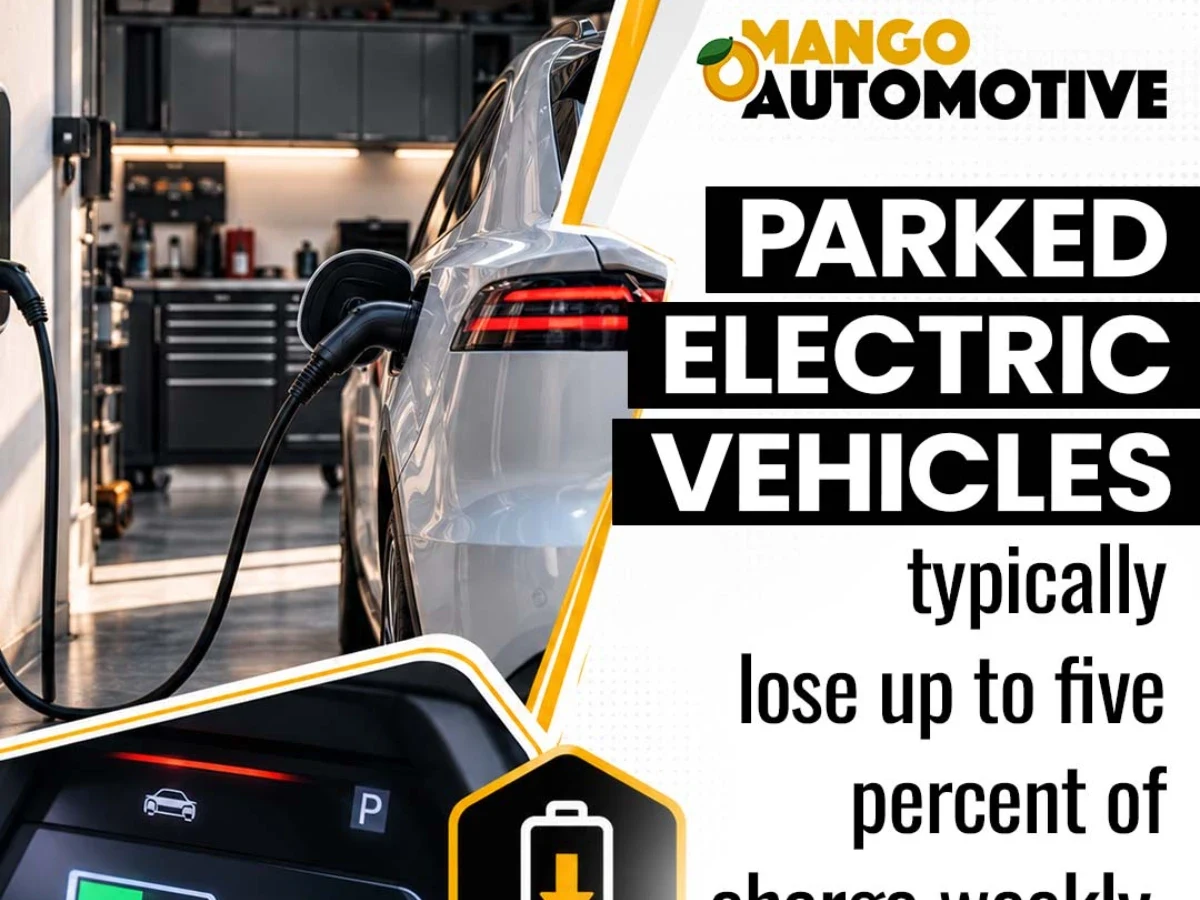
ALBUQUERQUE, N.M., November 18, 2026 - An electric vehicle does not completely shut down when the driver walks away. Mango Automotive is drawing attention to the background systems that can continue using energy while an EV is parked, helping Albuquerque drivers distinguish ordinary charge loss from changes that may warrant inspection.
The guidance addresses a phenomenon commonly called "vampire drain," in which battery monitoring, connectivity, security features, and temperature management consume small amounts of energy while a vehicle sits unused. For drivers seeking electric vehicle service in Albuquerque, recognizing a vehicle's normal parked behavior can make unusual changes easier to identify.

Parked EVs Continue Using Energy
Even while stationary, an EV may keep several electronic systems active. Battery management functions monitor conditions within the vehicle, while connectivity systems may remain available for mobile-app access, remote commands, and other features.
Security equipment and climate-related functions can also draw energy. The amount varies by vehicle, settings, temperature, and how frequently the car communicates with connected services.
Remote Activity Can Add to Parked Energy Use
Repeatedly checking an EV through a mobile app may wake vehicle systems that would otherwise spend more time in a lower-power state.
Research by EV battery data company Recurrent found measurable parked range loss during testing of a Tesla Model S. Its testing also found greater consumption when the vehicle was repeatedly contacted through an app. The findings involved a specific vehicle and should not be treated as a universal drain rate for every EV.
For owners, the more useful benchmark is often how their own vehicle normally behaves when parked under similar conditions.
Temperature Can Change What Drivers See on the Range Display
Ambient temperature is another factor behind changes in available EV range. Lithium-ion batteries behave differently in cold conditions, and energy may also be needed to warm the battery and cabin.
Research from the U.S. Department of Energy has documented reduced EV driving range under cold-weather conditions. While Albuquerque is known for hot summers, winter temperatures can still affect battery behavior, particularly when a vehicle remains outside for extended periods.
Battery Temperature Can Also Affect Available Power
Temperature does not influence range alone. An EV's battery management system may temporarily restrict power when the battery is too cold, too hot, or operating outside expected parameters. This can occur even when the dashboard shows charge remaining. Reduced-power operation is designed to limit stress on the battery or drivetrain while conditions change.
If power limitations repeatedly appear under ordinary temperatures or are accompanied by warning messages, an EV diagnostic inspection can help identify whether a supporting system or readable fault is involved.
The 12-Volt Battery Can Cause Unexpected EV Symptoms
A fully charged traction battery does not necessarily mean every electrical system has adequate power. EVs also use a separate low-voltage battery, commonly 12V, to operate electronics and help bring vehicle systems online. A weakened low-voltage battery can contribute to no-start conditions, warning messages, problems with locks, or other electrical symptoms even when the main battery displays plenty of charge.
Sudden Changes Deserve More Attention Than Routine Drain
Gradual parked energy use is expected, but a noticeable departure from the vehicle's usual pattern can be more informative. Drivers may want to investigate when charge begins dropping much faster than usual, electrical warnings appear after the vehicle has been parked, or the car has trouble powering on. A module that remains awake or an issue within the low-voltage electrical system can sometimes produce symptoms that resemble a problem with the main battery.
For those considering an EV diagnostic inspection in Albuquerque, noting when the problem started, how long the vehicle was parked, its starting and ending charge, and any dashboard messages can provide useful context during diagnosis.
Diagnostic Testing Helps Separate Normal Drain From a Fault
Because several systems can contribute to parked energy consumption, diagnosis should begin with the symptoms rather than assumptions about the high-voltage battery. An EV repair shop in Albuquerque can examine the vehicle's low-voltage electrical system, available fault information, and related components to help identify the source of unusual charge loss.
Mango Automotive provides 12-volt battery and electrical testing, supported scans of EV warning systems, and inspection of applicable supporting components. Owners should confirm their vehicle's make, model, and service eligibility when booking. High-voltage battery-pack repair and other dealer-level high-voltage procedures fall outside the shop's current service scope. Mango Automotive backs eligible repairs with a 5-year/60,000-mile warranty, subject to applicable terms and exclusions.

About Mango Automotive
Mango Automotive serves motorists from its Eagle Ranch shop in Albuquerque, offering vehicle diagnostics, maintenance, and repair across a range of domestic and import models. The location handles mechanical and electrical concerns, including supported services for hybrid and electric vehicles.
Source Link: https://www.mangoautomotive.com/why-does-an-electric-vehicle-lose-charge-while-it-is-parked